
Correcting Problematic Leadership Behaviors Impacting the Organization’s Performance and Operational Effectiveness
Many factors commonly influence decisions about promoting or hiring an individual into a management position –
but do they necessarily predict a manager’s success in the role?
Introduction
Problems that become evident during an individual’s performance in a leadership role can often be traced back to the reason that person was selected for the role in the first place. Talented individuals are often hired or advance to positions of management and executive-level responsibilities within organizations because they demonstrate any or all the following backgrounds or traits:
Seniority: When individuals have supported their employer over an extended period, they are likely candidates to fill management or supervisory openings when they occur – particularly if the organization maintains a “promote from within” policy. Hiring due to one’s lengthy tenure supporting the organization also rewards the individual’s demonstrated loyalty.
Institutional Knowledge and Unique Technical Skills: When individuals bring extensive institutional knowledge about performance of the organization’s core competencies, this attribute makes them a candidate to lead more junior staff who have less experience applying existing procedures used to optimize business success. Additionally, having special technical acumen is a common trait of those who set themselves apart as an asset to the organization and therefore as a candidate for a leadership position. Unique technical skills are important for the organization to retain, and career advancement to a leadership role for those with technical expertise helps implement valuable personnel retention strategies.
Pertinent Academic and Professional Certifications: At times, candidates for leadership positions need to meet certain educational or training requirements, mandated internally or by the organization’s clients. Individuals can be selected for leadership roles because they possess the right – or at times, required – academic degrees or professional certifications. This is especially true when the required degree or certification is less frequently held by others either within the organization or in the local labor market.
Being Part of the Hiring Manager’s Professional or Even Personal Network: Pre-existing professional relationships can provide the impetus for selecting a candidate for a leadership role. The hope is that there will be less ramp-up in terms of the ability of the candidate to establish effective teamwork, interdepartmental coordination and integrated efforts toward common goals.

Why is awareness of these common criteria for filling management openings important?
The factors listed above for hiring a manager or executive are common and sensible. But they omit or may minimize important considerations about the types of interpersonal skills and leaderships styles needed to lead others effectively within an organization.
What Types of Problems Can Occur When Leaders Demonstrate a Need to Develop a More Effective Leadership Style or Behaviors?
The problems listed below can be symptomatic of a need to build leadership competencies among those in management or executive positions. They are important for an organization to remediate rapidly, as they can create a range of operational inefficiencies and preventable costs.
Unnecessary conflict: Work-related battles involving a particular manager are frequent and seen as both unnecessary and avoidable.
Insubordination: Direct reports lose respect for their leader and may act out in detrimental ways.
Attrition of valuable staff: Resignations are often not due to people wanting to leave their organization, but instead to their desire to be led by a different manager. Attrition caused by supervisory relationship problems creates costly staff turnover that can drain talent within the organization.
Low organizational morale: When leadership is less effective, high rates of dissension and poor motivation can seep into business processes and impact coordination of high quality product/service delivery.
Legal risks: Costly lawsuits against the organization can be filed by employees for a range of different reasons associated with their subjective reactions to treatment by their supervisors or organizational leaders. These lawsuits can cite statutorily prohibited inequitable treatment, sexual harassment, personal boundary violations, and others.
When these types of problems manifest themselves in an organization, engaging a Leadership Coach can provide an effective, results-oriented solution.
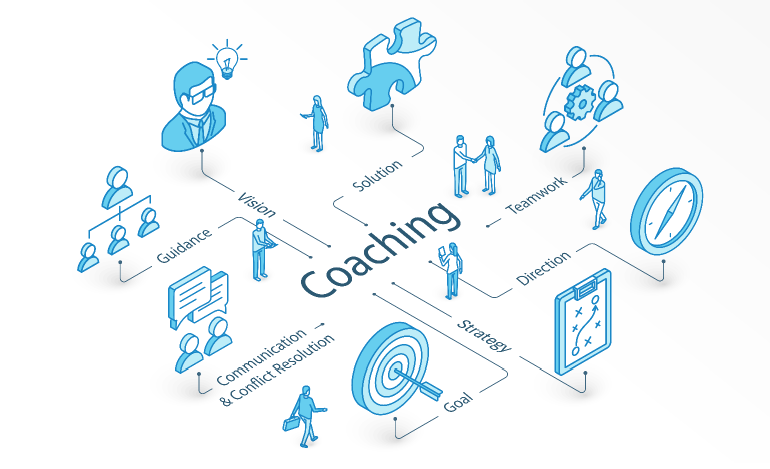
What can a Leadership Coach do to help turn around or remediate these types of problems?
Build the Individual’s Self-Awareness: Our Leadership Coaches focus on expanding one’s realistic sense of personal strengths and self-limiting challenges. The problem(s) that initiate the decision to engage a Leadership Coach provide a valuable set of empirical data useful in identifying, discussing and developing an awareness about behaviors that need to be addressed. Coaches use discussions of demonstrated personal strengths and evident challenges to guide the individual being coached toward more productive and positive leadership outcomes.
Provide practical skill-building exercises and competency reinforcement: Yes, despite what Allen Iverson might think, we are talking about the value of practice! Our Leadership Coaches direct clients to try new, more emotionally intelligent behaviors during performance of their leadership role. After these behaviors are practiced, coaches review the outcomes and reinforce those that create the positive results being pursued.
Provide and support a pathway to problem resolution: Since problems like those cited above tend not to disappear quickly despite the issue-focused coaching that is provided, it is valuable when the incremental steps needed to resolve the problems are clarified and an anticipated timeframe for issue resolution is established. For the organization, timely resolution of the identified problem or issue is an important outcome of providing leadership coaching to their management personnel.
Engaging a Leadership Coach is a valuable strategy to develop an individual’s “people management” competencies.

Case Study
Coaching Helps a Talented, Aspiring Firm Partner Address a Leadership “Blind Spot”
Problem to Address:
Low staff morale
Each year, a mid-size consulting accounting firm conducts a survey of staff to obtain feedback about a range of issues related to employee job satisfaction and opportunities for professional growth. One of the measures that staff are asked to rate is their relationship with their direct supervisor. In this firm, junior accountants report to more senior managers, who earn their supervisory role primarily based on production and financial performance, i.e., high volume of client billings.
The entire group of junior accountants who report to a particular senior accountant rated their relationship with their supervisor as “extremely dissatisfied”. In the part of the survey where respondents were encouraged to provide additional comments, the trend among this cohort of junior accounts was to note that their supervisor rarely had time for them or their concerns, kept her office door closed most often, and provided little in the way of mentorship. The only real face time a junior accountant had with this boss was in account management meetings, which often resulted in the senior accountant manager scolding staff for any inaccuracies or mistakes.
The accounting firm’s partners understood they must address this survey feedback quickly. They engaged Work & People Solutions to provide coaching to the senior accountant who was the source of this negative survey feedback.
The senior accountant maintained in early coaching sessions that she had little awareness of her negative impact on the group of junior accountants that she supervised – she thought they looked up to her and followed her direction willingly. She was unaware that staff considered her “dismissive” of them. She rationalized that she was extremely busy keeping her clients happy. She also was very motivated to earn partner status at the firm in the future, which she equated with a high volume of client billings rather than supervisory effectiveness.
The coaching process included extensive discussions about this “blind spot” related to the impact of her management behaviors. The coach recommended a series of actions for the senior accountant to perform in order to remediate the problems that the supervisees had raised in the firm’s annual internal survey. She established an Open Door policy for a set number of hours each week, encouraging staff to bring their issues to her to work through. She initiated a series of Brown Bag lunches in which her team convened during the lunch hour in an office conference room to talk openly about client relations and work challenges. Through intensive discussions about effective leadership skills, the coach emphasized that the senior accountant actually owned skills in empathy and listening – skills she applied far more to her business clients than to her direct reports. She simply was not invested in using these skills often enough in performing her leadership role.
After several months of leadership coaching opportunity for this senior accountant, the accounting firm’s senior partners heard directly from the junior accountant staff members of the coaching client that their morale was “much improved”. None of them resigned, seeing that the firm followed through on their survey feedback that led to positive changes in their supervisory relationships. Many expressed gratification that working under their assigned senior accountant had become far more pleasant and professionally helpful.
Problem Solving Strategy
Engage an experienced Leadership Coach
Coaching Process
– Build self-awareness of blind spot
– Recommend remedial actions
– Process impact/results of these corrective behaviors
– Support ongoing skill development
Case Outcome
– Higher staff engagement, morale
– Talent retention
– Support for high-producing manager’s professional growth